
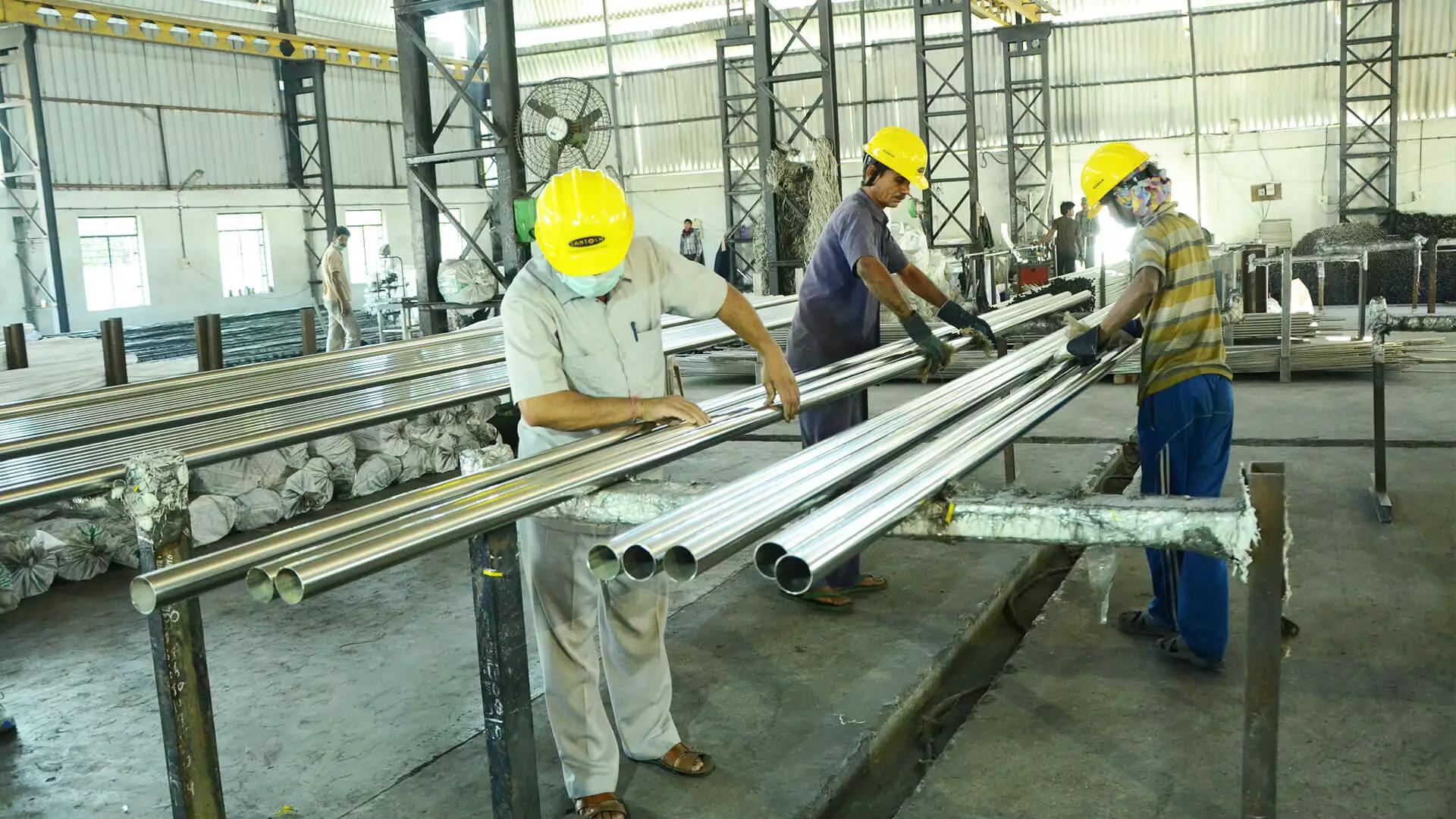
When it comes to designing robust industrial systems, selecting the right piping material is not just a matter of preference. It is a critical engineering decision. Whether you are building a high-pressure chemical processing plant, a commercial plumbing system, or a state-of-the-art food processing facility, the backbone of your fluid transportation relies heavily on one crucial component: the stainless steel pipe.
Renowned for its exceptional corrosion resistance, longevity, and high strength-to-weight ratio, stainless steel is the gold standard across multiple sectors. However, once you decide on the material, you are immediately faced with the most common dilemma in pipe procurement: Should you choose a seamless stainless steel pipe or a welded stainless steel pipe?
This comprehensive guide explains the manufacturing processes, advantages, disadvantages, applications, material grades, sizing standards, and selection criteria for stainless steel pipes.
Before comparing manufacturing methods, it is important to understand why stainless steel is widely used in industrial and commercial applications.
Stainless steel is an alloy of iron containing a minimum of 10.5% chromium. Chromium forms a protective oxide layer on the surface, which prevents corrosion and rust formation. This property makes stainless steel pipes suitable for handling purified water, corrosive chemicals, steam, and cryogenic fluids.
| Property | Benefit |
|---|---|
| Corrosion Resistance | Excellent resistance against rust and chemicals |
| High Strength | Suitable for high-pressure applications |
| Long Service Life | Reduced maintenance and replacement costs |
| Temperature Resistance | Performs well in extreme hot and cold conditions |
| Hygienic Surface | Ideal for food and pharmaceutical industries |
A seamless stainless steel pipe is manufactured without any longitudinal weld seam.
The process begins with a solid cylindrical billet of stainless steel. The billet is heated and pierced through the center using a mandrel to form a hollow tube. The tube is then rolled and stretched to achieve the desired dimensions.
| Industry | Application |
|---|---|
| Oil & Gas | High-pressure fluid transport |
| Chemical Processing | Corrosive chemical handling |
| Power Plants | Boiler and steam pipelines |
| Hydraulic Systems | Pressure-sensitive operations |
| Marine Industry | Saltwater applications |
A welded stainless steel pipe is manufactured by rolling stainless steel sheets or strips into a cylindrical shape and welding the edges together.
Flat stainless steel sheets are roll-formed into a pipe shape. The edges are welded using TIG or high-frequency welding techniques. After welding, the seam is treated and finished to improve strength and corrosion resistance.
| Industry | Application |
|---|---|
| Water Treatment | Fluid transportation systems |
| Food Processing | Hygienic process pipelines |
| Construction | Structural applications |
| HVAC Systems | Air and fluid movement |
| Wastewater Plants | Drainage and treatment systems |
| Feature | Seamless Stainless Steel Pipe | Welded Stainless Steel Pipe |
|---|---|---|
| Manufacturing Process | Extruded from solid billet | Rolled and welded from sheet |
| Pressure Capacity | Very High | Moderate to High |
| Cost | Higher | Lower |
| Wall Thickness | Slight variation possible | Highly consistent |
| Size Availability | Small to medium diameters | Large diameters available |
| Lead Time | Longer | Shorter |
| Best Applications | High-pressure and critical systems | General industrial applications |
Selecting the right stainless steel grade is equally important when choosing pipes.
| Feature | 304 Stainless Steel Pipe | 316 Stainless Steel Pipe |
|---|---|---|
| Composition | 18% Chromium, 8% Nickel | 16% Chromium, 10% Nickel, 2-3% Molybdenum |
| Corrosion Resistance | Excellent | Superior in chloride environments |
| Cost | More economical | Higher cost |
| Applications | Food processing, plumbing, structural use | Marine, chemical, pharmaceutical industries |
| Saltwater Resistance | Moderate | Excellent |
Pipe wall thickness is identified using a Schedule number. A higher schedule means a thicker pipe wall and greater pressure handling capability.
| Schedule | Wall Thickness | Typical Usage |
|---|---|---|
| Schedule 10 | Thin Wall | Light structural applications |
| Schedule 40 | Medium Wall | General industrial usage |
| Schedule 80 | Heavy Wall | High-pressure systems |
| Schedule 160 | Extra Heavy Wall | Extreme pressure applications |
| Parameter | Pipe | Tube |
|---|---|---|
| Primary Function | Fluid and gas transport | Structural and precision applications |
| Measurement Method | Nominal Pipe Size (NPS) | Exact Outside Diameter (OD) |
| Wall Thickness | Defined by Schedule | Defined by gauge or exact thickness |
| Precision | Lower dimensional precision | Higher dimensional accuracy |
| Applications | Industrial piping systems | Medical, instrumentation, automotive |
Selecting a reliable stainless steel pipe manufacturer or supplier ensures quality, durability, and compliance with industrial standards.
Choosing between seamless and welded stainless steel pipe depends entirely on your project requirements. Seamless stainless steel pipes are ideal for high-pressure, high-temperature, and critical industrial environments where safety and performance are priorities.
Welded stainless steel pipes offer an economical and highly practical solution for most industrial, structural, food-grade, and commercial applications. They provide excellent dimensional accuracy and are available in larger sizes with shorter lead times.
By understanding manufacturing methods, pressure ratings, material grades, schedules, and supplier standards, industries can select the right stainless steel piping solution for long-term performance and operational reliability.