
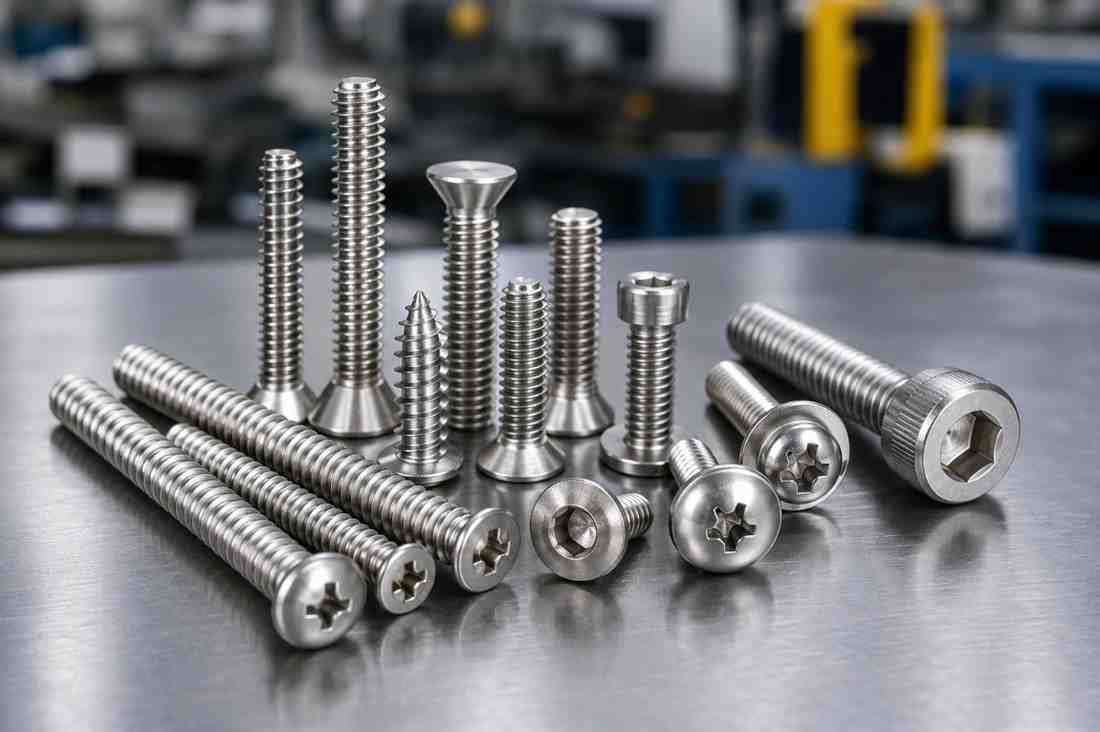
Industrial fastening is the backbone of countless engineering projects, from towering buildings and heavy machinery to automotive systems and marine equipment. The strength, durability, and reliability of a structure often depend on the quality of its fasteners. Among the many fastening solutions available, stainless steel screws have become the preferred choice for engineers across industries.
Their exceptional corrosion resistance, high mechanical strength, and long service life make them an ideal solution for demanding environments. Whether used in construction, manufacturing, chemical processing, or offshore applications, stainless steel screws deliver consistent performance while minimizing maintenance and replacement costs.
In this guide, we'll explore why engineers rely on stainless steel screws for industrial fastening, their key advantages, common grades, applications, and tips for selecting the right screws for your project.
Stainless steel screws are threaded fasteners manufactured from stainless steel alloys containing chromium, which forms a protective oxide layer on the surface. This natural layer protects the screw from rust, corrosion, and environmental damage.
Unlike conventional carbon steel screws, stainless steel screws maintain their structural integrity even when exposed to moisture, chemicals, saltwater, and fluctuating temperatures.
They are available in various head styles, thread types, lengths, and diameters, making them suitable for a wide range of industrial fastening applications.
One of the primary reasons engineers choose stainless steel screws is their outstanding resistance to corrosion.
Industrial environments often expose fasteners to:
The chromium-rich surface of stainless steel forms a passive protective layer that continuously shields the screw against rust and oxidation.
This makes stainless steel screws particularly valuable in marine, chemical, pharmaceutical, and food processing industries.
Industrial fastening requires screws that can withstand continuous mechanical loads without failure.
Stainless steel screws provide:
These properties ensure secure fastening even under vibration, dynamic loading, and heavy operating conditions.
Replacing fasteners in industrial systems can be expensive and time-consuming.
Because stainless steel screws resist corrosion and wear, they often remain functional for decades with minimal maintenance.
A longer service life means:
This long-term value makes stainless steel screws a cost-effective investment despite their higher initial price.
Industrial equipment frequently operates under extreme temperatures.
Stainless steel screws maintain their strength and structural stability in both:
Their ability to perform under thermal stress makes them suitable for demanding industrial operations.
Industries such as food processing, pharmaceuticals, and medical manufacturing require clean, contamination-resistant materials.
Stainless steel screws offer:
These qualities help facilities comply with strict hygiene standards.
Choosing the right grade is essential for achieving optimal performance.
Grade 304 is the most widely used stainless steel fastener.
Benefits include:
Common applications include:
Grade 316 contains molybdenum, providing enhanced corrosion resistance.
It performs exceptionally well in:
Engineers often select 316 stainless steel screws where exposure to chlorides and aggressive chemicals is expected.
Grade 410 offers:
These screws are commonly used where high strength is more important than maximum corrosion resistance.
Because of their versatility, stainless steel screws are used across numerous industries.
Applications include:
Manufacturing equipment relies on stainless steel screws for:
Marine environments are highly corrosive due to constant saltwater exposure.
Typical applications include:
Chemical plants require fasteners capable of resisting aggressive chemicals.
Stainless steel screws are widely used in:
Food manufacturers depend on stainless steel fasteners for:
Their hygienic properties make them ideal for sanitary environments.
Automotive engineers use stainless steel screws for:
| Feature | Stainless Steel Screws | Carbon Steel Screws |
|---|---|---|
| Corrosion Resistance | Excellent | Low |
| Rust Protection | High | Requires coating |
| Maintenance | Minimal | Frequent |
| Lifespan | Long | Moderate |
| Outdoor Performance | Excellent | Limited |
| Appearance | Attractive finish | Coating may deteriorate |
Although carbon steel screws are less expensive initially, stainless steel screws provide better long-term performance and lower lifecycle costs.
Selecting the correct screw involves more than choosing the right size.
Consider the following factors:
Determine whether the application involves:
Choose:
Select the appropriate:
based on your application.
Thread type influences holding strength and installation performance.
Always match the thread design to the base material.
Evaluate:
to ensure proper fastening performance.
Even though stainless steel screws require very little maintenance, following a few best practices improves their lifespan:
These simple practices help maximize reliability in industrial applications.
Selecting the right supplier is just as important as selecting the right fastener.
Shubham Metals is a trusted manufacturer, supplier, and exporter of premium-quality stainless steel screws designed to meet the demanding requirements of modern industries. The company focuses on precision manufacturing, stringent quality control, and adherence to international standards to deliver fasteners that offer exceptional durability and performance.
Customers choose Shubham Metals because of:
With a commitment to quality and customer satisfaction, Shubham Metals supplies stainless steel screws that perform reliably even in the most challenging environments.
Engineers prefer stainless steel screws because they combine strength, corrosion resistance, durability, and long-term reliability in a single fastening solution. Whether used in construction, manufacturing, marine engineering, food processing, or chemical plants, these fasteners deliver dependable performance while reducing maintenance and replacement costs.
Choosing the right grade, screw type, and trusted supplier is essential to achieving safe and efficient industrial fastening. By investing in premium-quality stainless steel screws, businesses can improve operational efficiency, extend equipment life, and lower overall lifecycle costs.
For projects that demand precision, durability, and consistent performance, Shubham Metals offers high-quality stainless steel screws engineered to meet the evolving needs of industries worldwide.